


 |
| moolavar |
Ananthapura – Kerala – 671 321
Sri Ananthapadmanabha Swamy Temple is Vibrant with the spiritual power of Lord Mahavishnu is located near the northern end of Kerala, in Ananthapura near Kumbla in Kasaragod District. The temple is known as the moolasthanam, the original source, of the Sri Anantha Padmanabha Swamy Temple of Thiruvananthapuram, the capital of Kerala State, which is in the far south.
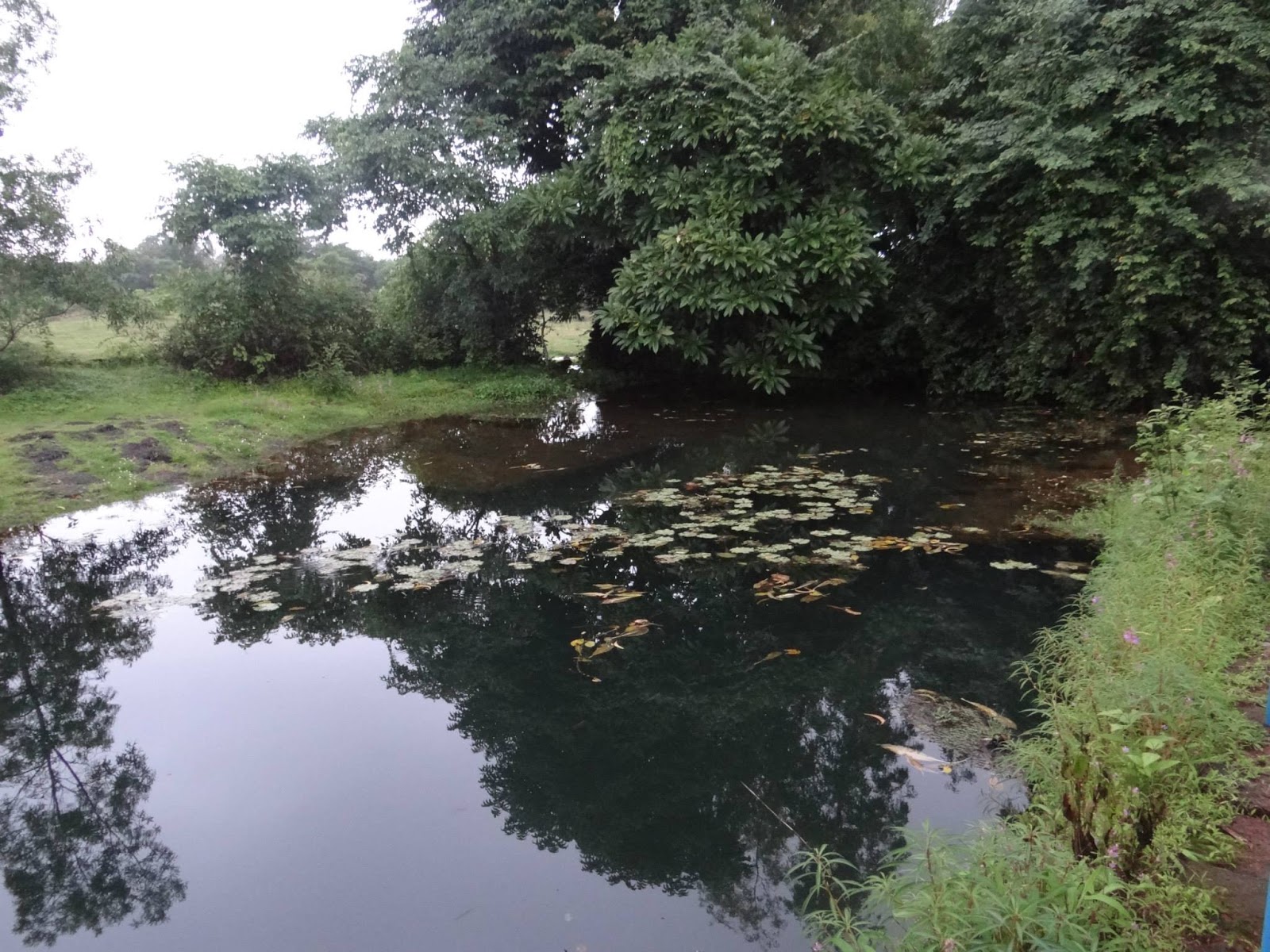
The Landscape on the way to the temple opens a vast panoramic scene with ranges of sprawling hillocks on the background. An aura of peace and solitude permeater the whole region. On the midst of a vast grass land remains in splendorous charm Sri Anantha Padmanabha Swamy Temple, in the centre of a rectangular lake.
The piligrim is reminded of the Puranic Symbology of Lord Vishnu, the all-perrading and timeless supreme reality, resting on the serpent Anantha, representing the endless phenomenon of time, and floating in the Ksheera Sagara, the ocean of Milk, representing the endless energy of creation.
Here, in the Sreekovil, the sanctum sanctorum, of the temple, Sri Anantha Padbhanabha is depicted as seated on the divine serpent Anantha, while in the Sri Padmanabha Swamy Temple of Thiruvananthapuram, the Lord is reclining on Anantha. On both the sides of the Lord are Bhoodevi, the Goddess of Earth and Sreedevi, the Godess of Prosperity. Garuda and Hanuman stand in front of them praying with folded hands. Heavely maidens tan the Lord and his consorts from behind. Jaya and Vijaya, Lord Vishnu’s attendants, stand in guard at the entrance.
The Sreekovil is surrounded by a rectangular lake. The Gopuram, the temple edifice, and the Sreekovil are connected by a small bridge. On the outer walls of the Sreekovil there are marvellous and ancient mural paintings on Puranic themes. To protect these paintings an outer wall was constructed around the Sreekovil in recent times.
The Legend about the temple associates it with the great mystic and devotee of Lord Vishnu, Sree Vilvamangalathu Swami, who dominates the ancient spiritual lake of Kerala. In fact, his fame for extends the borders of Kerala. In Bengal he is popular as Bilvamgala. A legend associated with Vilvamangalathu Swami describes the temple as the Moolasthanam of Sri Padmanabha Swamy Temple of Thiruvananthapuram.
While Sage Vilvamangalthu Swami was doing penance in the holy spot, Lord Krishna used to visit him disguised as a mischivous little boy. One day he did some pranks on him while the swamigal doing his pooja. Swamigal, at his wits end, admonished the child and pushed him with his back hand. The Lord, transformed into a ball of divine aura hastened through the cave. A divne voice echoed “Now if you want to see me, come to Ananthankadu”. Then only Vilvamangalathu Swami realised that the boy was none other than his own lord. It is said that the sage also ran into the cave and going through the passage that formed there he reached the Seashore and from there travelled southwords in search of Ananthankadu, At last the sage reached a place which is the present location of Thiruvanathapuram, the capital of Kerala, where he had the splendrons vision of Lord Vishnu. It was at this holy spot Eventually Sri Anantha Padmanabha Swamy Temple of Thiruvanathapuram came up. On the north-East corner of the lake there is still a big cave with a small pit with a parennial presence of water in it, Which is considered as a sacred Theertham. It is beleivered to be the cave where boy Krishna disappeared.
Near the south-west corner of the lake there is a shrine housing a very graceful idol of Sreekrishna belived to have been the same idol worshipped by Sri Vilvamangalathu Swamy. Refere the book Sree Padmanabha Swamy Temple written by Smt. Ashwathi Thirunal Gowri Lekshmi Bai of Travancore Royal Family.
Vilvamangalathu Swamiyar and the Namboodiri connection.
This is the most accepted version regarding the consecration of the Temple and relates to the famous Namboodiri Brahmin sage by name Vilvamangalathu Swamiyar. Three Vilvamangalattu Swamiyars have lived during different times, according to some. Vilvamanagalam I dates to the 9th century and Vilvamangalam III to the 16th century( about 1585 AD) with Vilvamangalam II coming in between. Even if the 9th Century saint is accepted as the Central figure in this Sthala Puranam, anachronism is glaringly obvious. The story basically runs on the same lines as that of Divakara Muni, deviating only at certain points. The location is in North Malabar and the Kasargode Sree Ananthapuram Temple featured in both. Here the child does not stay with the swamiyar but would faithfully appear every day during the Puja time of the sage. The Salagrama episode is the same and here the saint shows his annoyance by pushing back the little one with the back of the hand. (To this day it is deemed inauspicious to push someone away, with the back of the hand). The next difference in the story surfaces a little later on. It is said that the Sage ran after the child but soon lost track of him. The sound of the bells on the anklets adorning those little feet and on the waistband guided him for some more time, then they too ceased. The Sage wandered from place to place, consecrating many renowned temples of today on the way and getting many divine experience. He moved from North Kerala to the South Kerala in his ceaseless quest of the divine Child and Ananthankatu where he would find him. One evening he rested under a tree, physically and mentally weary. From the opposite side where stood the hut of a Pulaya, he heard the raise voice of an angry Pulayi threatening her baby who would not stop crying, that she would throw it into Ananthakatu if it did not stop wailing. The joyous Sages rushed to the hut and in answer to his question, the woman pointed to the near-by forest which was the destination of his long search. After blessing her and taking a single lighted wick from her to aid his progress into darkness in search of the Supreme Light, the Swamiyar entered the forest. Before long, the dearly familiar sound of the waistbells and anklets could be heard. In the pre-dawn hours, suddenly an lluppa tree crashed down with a mighty sound before him and a great radiance manifested. On reaching the spot he got the Darsanam or Vision of God as Sree Padmanabha Swamy reclining on the serpent chief Ananta. The extent of this form and the subsequent reduction in size in response to the Sage’s prayers are the same as in the story about Divakara Muni. Having nothing else to offer to the Lord, the Swamiyar took a small unripe mango from a nearby tree and placing it in a dry coconut shell submitted the same to the Lord in an overflow of emotion. The offering of a salted mango in the coconut shell which is reported to be the same one used by the Swamiyar though now covered with gold and gem studded, continues as an important daily Nivedyam to this day. In this connection it merits mention that the wood of this Iluppa tree is believed to have been utilized to carve the figure oh Sree Padmanabha Swamy and till the time of Marthanda Varma the Great, the Idol is seen to be of this wood. The Naduvil Madhom Pushpanjali Swamiyar’s premises lying to the west of Sree Padmanabha Swamy Temple also contains a Sree Krishna Temple which is believed to have been consecrated on the Villvamangalathu Swamiyar’s Samadhi. This adds much weight to the sage’s link with the Temple.
The necessary presence of a Namboodiri Brahmin who has embraced Sanyasam and has become a Sanyasi renunciate) of a monastic order and who is known as the Pushpanjali Swamiyar since he performs the daily Pushpanjali (workship with flowers) and holds an important place in Temple affairs, as well as the fact that the traditional Tantri family — the supreme arbitrator in Temple matters – is also of Namboodiri stock – corroborate the ongoing Namboodiri tradition in the Sree Padmanabha Swamy Temple.
The Sree Anantapuram Temple in kasargode is related to both Divakara Muni and Vilvamangalathu Swamiyar. Kasargode which is today a part of Kerala was once in Tulu country. As such a trend of thought strongly prevails that both these sages were in reality one individual.
As per these accounts the time slot detailed dates back to some centuries only where as this Temple has gained repeated mention from the time of the undated Puranas and ancient literature. Hence the presence of the anachronism with regard to the popular belief connected with the Sthala Puranam. The one explanation seems to be that while it is an established truth that the Sree Padmanabha Swamy Temple exists enveloped in timelessness, it is possible that this great shrine too faced reversals of fortune at certain phases of evolution necessitating its rediscovery and consequent re-consecration, while the Divinity in the Saguna aspect (that which has a form) continued unaffected. The physical constructions however have undergone alterations and structural renovations at different stages of the spiritually significant march of the Temple down the corridors of ages to emerge on the calendar of centuries with the brilliance of multitudinous suns.
The idol of Sri Anantha Padmanabha Swamy and other idols are neither metal or stone, but made of a rare combination of more than 108 materials called Kadu-Sarkara-Yogam. Today this rare combination is known only to an aged artisan, Sri Subrahmanyan Achary and family of Vaikom.
Katu-Sarkara-Yogam
After selecting a good tree from an area where high quality trees like Karinjali (Acacia Catechu), Devatharu (Cedrios Deodara), Chandanam, (Sandalwood or Santalam Album) etc. grow, it should be cut and brought o the location where the work is to be carried out. In conformity with the specifications of the idol to be fashioned, a Pasam or rope scale should be made. The waist measurement and chest measurement should be demarcated on it. Representing the bones as it were, as the continuation of the waist in downward trend, at the extremities, the feet measurements are arrived at and in like manner the extremities from the chest area lead to the arms according to a measurement fixed for them, along with the measurements for the entire back. The areas of the palms, feet, ears, and nose should be constructed by tying copper plates of suitable dimensions on to the basic structure. This is known as the Soolam (skeleton) of the idol. Four palams7 (a local unit of weight) of Thiruvatta-pasa (Pinus Roxlrerghir), which is the gum from the comman gum tree, is taken along with three palams of kundirikkam (Bozwelliz Serrata), five palams of Gulgulu (Commiphora Mukal), one palam of jiggery, eight palams of Chenchalyam (resin of Shorea Robusta) and three palams of Kavi earth(red lumber stone or red ochre) and all these six ingredients are powdered well. This powder is put into an earthen pot, mixed with equal portions of oil and ghee and rolled in this medium. The mixture is then cooked over fire till it reaches the consistency of honey. Thereafter it is removed from the fire and it cools, it is applied all over the skeleton idol. Thus after the coating turned Ashtabandhalepanam which bins the frame is carried out in the manner described above, coating of the nerves or Nadi Bandhanam commences. The fine fibre of the hardened coconut husk(husk of Cocos Nucifera) is removed, washed and cleaned well and is twisted from left to right in three spirals and tied on ti this skeletal frame constituting Ida, Pingala and Sushumnam, which are the three vital nerves of the spinal cord along with the four other nerve centres known as Pusha, Yasaswini, shankhini and Kuhu. Collectively they represent the Saptanadies or the seven nerve centres of the body.
Sand from Jangala Desam or barren land, Anoopa Desam or marshly land and from plain land are brought, washed and cleaned seperately. Three different types of concoctions consisting of (1) a combination if Karinjali (Acacia Catechu) and Maruthu(Terminalia Paniculata), are prepared and boiled together to a thick consistency, (2) Nalpamaram, decotion made out of the bark of the four fig trees viz.Athi,Ithi, Arayalu and Peralu(Ficus Racemosa, Ficus Gibbosa, Ficus Religiosa and Ficus Bengalensis) and 93) decotion of Kolarakku (lac) are prepared. The sand is put in each of these solutions and dried thereafter, it is then put in Thriphala Kashayam for a duration of ten days are redried. Thriphala Kashayam is made of these ingredients, Katukka (Tirmernalia Chebrila), Nellikka (Gooseberry or Embilica Officinalis) and Thannikka (Tirminalia Ballerica). River sand is powederd well and a portion equal to ¼ th of the quantity of each of the three types of previously prepared sand added to it. This mixture of medicinal sands is ground into a paste using the Thriphala Kashayam as the liquid base. Yavam (Barely-Hordeum Vulgare), wheat and the leaves of Kasavu (Memecylon Edule) are seperately powdered and mixed and 1/8 th of the prepared sand added to it. It is wetted with well the water of the matured coconut and ground daily for ten days to make it into a composition. Equal powdered quantities of Thiruvatta-pasa (gum of the common gum tree), Gulgulu, Kundirikkam and Chenchalyam (refer previous text for all above tree) are added in a proportion of 1/4th of the same to the special sand and the mixture ground well adding honey to it. Wqual quantities of Chukku (dried ginger).
Pepper, Turmeric and Thrippali (long pepper or Piper Longum) are powdered together and 1/24th measure added to the same and unified by mixing honey, milk and ghee and grinding them. As the next stage, plavin-pasa (leaf latex-Artocarpus Integrifolia) and the inner substance of the koovala-kayu (Aegla Marmelos) are taken in equal quantities and ground. 1/15th of this substance is added to the sand and re-ground adding a little bit of oil. Kumkumam (composite powder of red colour), chandanam (sandal), Aritharam (Acacia Pernesiana), Kottam (Sassurea lappa), Karpoora (camphor), Akil (Indian Cedar) and Gorochana (Benzar-extract from gall region of oxen) are powdered and 1/32nd of the sand is added and ground in an oil got by pounding the leaf of kasavu (refer prior text) to powder. Kasthuri (musk) is added to a slightly powdered mixture of gold, silver, river sand, sand from the crab’s hole, sea sand, sand from the ant hill, sand from the elephant tusks. This mixture is again added to the prepared sand. This composition is deposited in a kashayam or decoction made from the resin of the Iluppa tree (Bassia Longifolia). The same is boiled and cooked for five days and thereafter ground. A quantity of coconut husk fibre equal to 1/4th of the mixture is cut into small bits and mixed with this sand to which the gum of Koovalam and gum of Plavu (refer previous text for both ingredients) have been added. The same is pounded for ten days to make it into a composite whole. This composition is applied separately on the different parts of the frame of the idol which acts as its skeleton and on which the Nadi Bandhanam (amalgamating the nerves of the skeleton through special processes) has already been accomplished. It is rubbed well into those parts. This particular method is not to apply this mixture in thick layers but to give a thin coating with the mud paste. Now it is time to introduce the required characterstics of the idol on to the body which covers the frame. Pure silk on which the gum of leaf latex has been smeared is wrapped completely round the different parts of the body over and abovethe silk, equal proportions of powdered river sand, Kozhippara (a specific rock ground to powder) and black coloured stones found on the river bed, are ground and daily mashed into a paste for the duration of one month in a decoction of Thriphala, gum of Plavu and gum of Koovalam(refer previous text for all three). A thin coating of the same is applied all over the idol and dried. An application of Sankhu powder (powdered conch) is made on the idol giving it a whitening effect. Required decorations and ornaments are worked on the surface enhancing the grandeur of the idol.
One can see from the ingredients used in the Katu-Sarkara-Yogam for the construction of the idols that they are all medicinal. Just as the human body is protected with a natural medicinal coverage, the same concept is extended to the idol to which a living form is being bestowed.
This is the process of Katu-sarkara-Yogam in brief. Even this patially insufficient description is enough to project the greatly complicated procedure which goes into the formation of a Katu-Sarkara Idol. As such it is of no surprise that idols of this nature, though a speciality of Kerala, are so rare even in the land of their origin.
A very unusual phenonmenon of this temple is the presence of a single crocodile in the temple lake, named ‘Babia’. By tradition, the lake is inhabited by a single corcodile and in the memory of the very aged men the present crocodile happens to be the third one they have seen. When one crocodile dies another one inevisbly appears in the lake and this continues to be an unexplained phenomenon. There is no river or pond nearby where crocodiles exist. The Crocodile is friendly and harmless to human being. Its presence in the lake around the Mahavishnu temple reminds one of the well-known Gajendra Moksha Stories in the Bhagavatha Puranam.
The above history is shared from the temple website
Thanks to bhaskar ranganathan for moolavar photo and Deepak katti for other photos. Some photos are also shared from temple website.


